BIODIVERSITY
BIODIVERSITY AT AN AIRPORT – yes, but why?
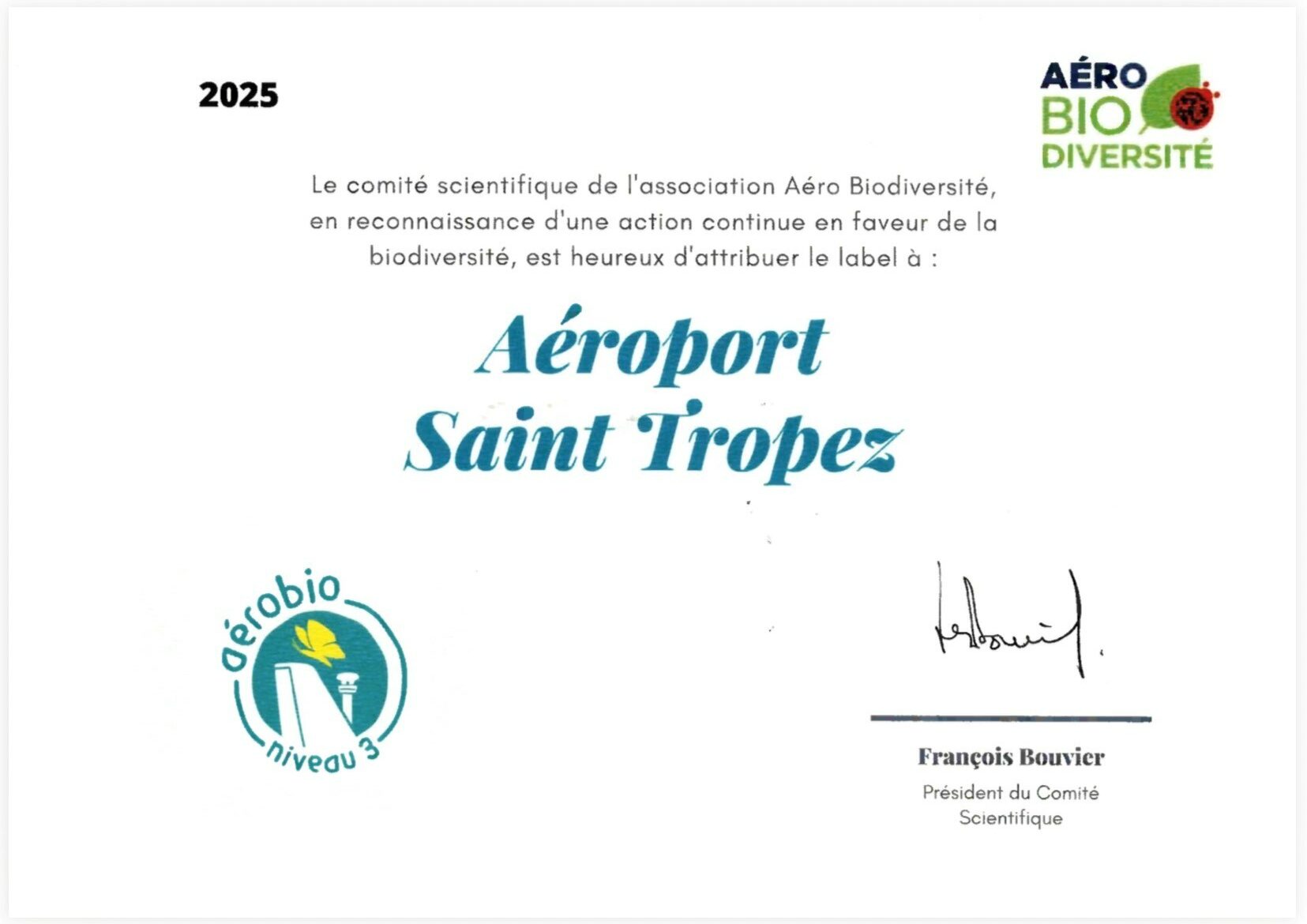
In June 2023, the Golfe de Saint-Tropez airport was awarded the aerobio label for its commitments and actions in favor of nature.
This label, initiated by theAérobiodiversité association in 2020, aims to establish long-term biodiversity programs for airports and airfields. The decision to award the label, which comprises three levels, is pre-analyzed by Aéro Biodiversité teams before being decided, independently and ethically, by the Scientific Council drawn from the Muséum national d’Histoire naturelle (MNHN).
The three levels of the aerobio label
- Level 1: Understanding biodiversity
- Level 2: Monitoring and enhancing biodiversity
- Level 3: Sustainably integrating and promoting biodiversity
- Level 4: Collaborate and Make an Impact Beyond the Platform
- Level 5: Setting the standard for commitment to biodiversity
The label covers four biodiversity issues: biodiversity, employee investment, communication and local presence.
The Gulf of Saint-Tropez Airport has earned Level 3 certification by demonstrating its knowledge of its local environment, its expertise in land management, and its strong commitment to educating the public about and raising awareness of biodiversity.

Special features of the airport in terms of biodiversity
The riparian vegetation includes various plant species such as Poet’s Narcissus (Narcissus poeticus), Three-cornered Garlic (Allium triquetrum) and Involucre Fritillary (Fritillaria involucrata).
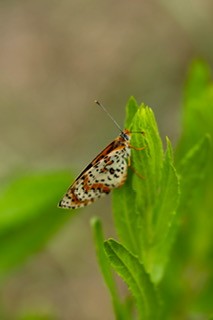
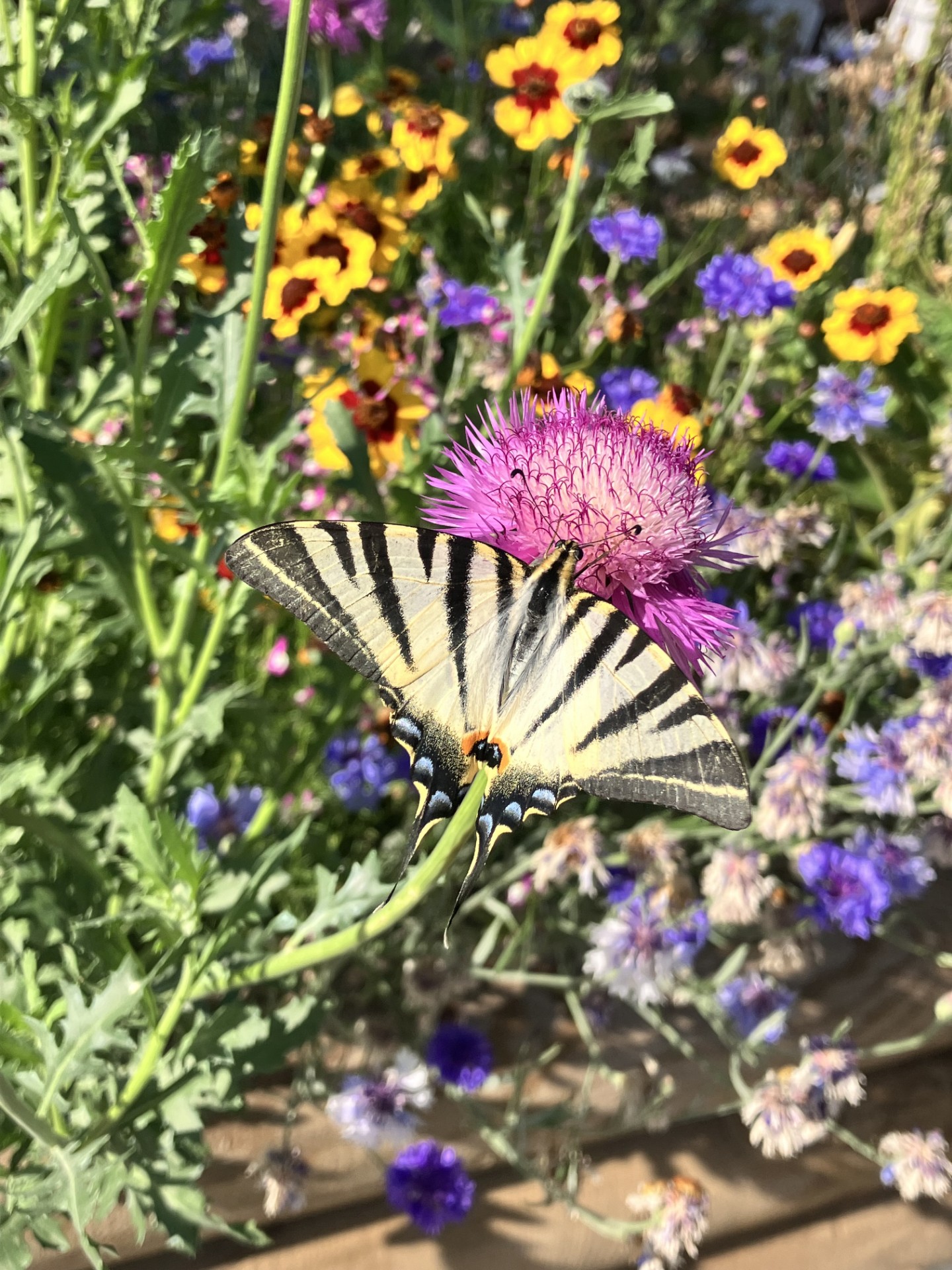
Several birds of prey fly over the platform, such as the Short-toed Eagle (Circaetus gallicus) and the Black Kite (Milvus migrans), but it is the hedgerows in particular that represent a particular challenge for many passerines, such as the Spectacled Warbler (Sylvia conspicillata), a species considered “Endangered” in the PACA region and which was surveyed on the platform in 2022. A nationally protected butterfly, the Diana (Zerynthia polyxena), is present on the platform mainly in the riparian zone, where several stations of Aristolochia rotundifolia, its host plant, have been observed. The recurrent observation of eggs of this species attests to its reproduction on the site. Several zones have been set aside to protect the species’ development cycle.